The $4 Secret Hiding in Your Pharmacy Aisle: A Realistic Guide to Generic Savings
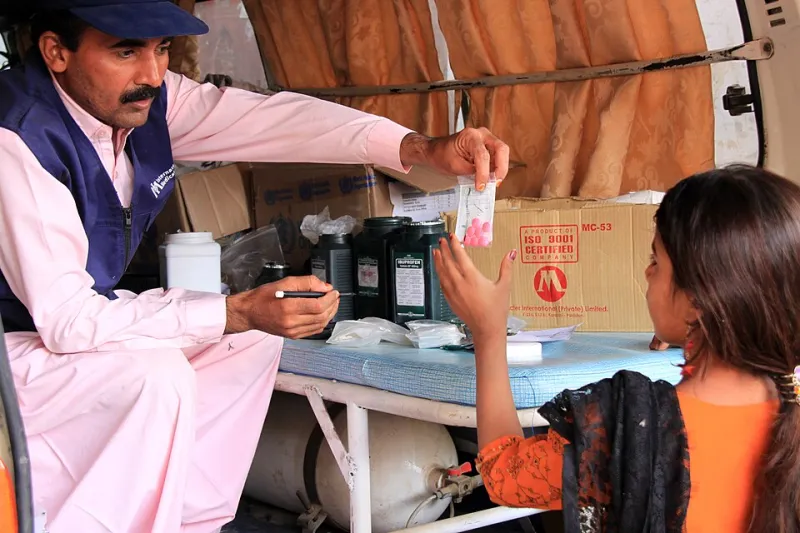
Photo: DFID - UK Department for International Development, CC BY 2.0, via Wikimedia Commons
You've probably stood at the pharmacy counter, heard the total, and wondered why the little white pills cost more than your monthly streaming subscriptions combined. Then a well-meaning friend mentions generics, and suddenly you're Googling whether the cheaper version is "basically the same thing."
Short answer: yes, mostly. But "mostly" deserves a closer look, because the details are where smart shoppers — and safe ones — live.
What "Generic" Actually Means (Legally Speaking)
A generic drug isn't a lookalike sneaked onto the shelf. In the United States, a generic must go through the FDA's Abbreviated New Drug Application (ANDA) process. The manufacturer has to prove their version is bioequivalent to the brand-name original — meaning it delivers the same active ingredient at the same rate and to the same extent in your body.
The FDA's benchmark is strict: the generic's absorption must fall within roughly 80–125% of the brand drug. That sounds like a wide window, but in practice, most approved generics land far closer to the mark. Studies comparing generics to their brand counterparts repeatedly show differences of only a few percent — often smaller than the variation between different batches of the brand drug itself.
Same active ingredient, same strength, same dosage form, same route of administration. What differs? The inactive ingredients — fillers, dyes, coatings — and, crucially, the price.
Why the Price Gap Is So Massive
Brand-name drugs carry the cost of discovery: years of clinical trials, failed compounds, regulatory hurdles, and marketing. Once a patent expires, generic manufacturers skip the expensive R&D phase and compete with each other. More competitors, lower prices — it's one of the few places where the free market works exactly as advertised.
The savings are real and well-documented:
- First generic to market: typically 15–35% cheaper than the brand
- After 2+ competitors: often 50% off
- With many competitors: savings can reach 85% or more
A widely cited figure from the FDA and the Association for Accessible Medicines puts the average generic discount at around 80–85% compared to brand prices. On a chronic medication you'll take for years, that difference compounds fast.
The Misconceptions That Cost You Money
"Generics are weaker." Nope. Bioequivalence testing exists precisely to rule this out. If a generic didn't perform like the brand, it wouldn't be on the shelf.
"Generics are made in sketchier factories." Often, the brand manufacturer makes the generic too — sometimes in the very same facility. Roughly half of all generic prescriptions in the US are produced by brand-name drug companies.
"Generics cause more side effects." The active ingredient is identical, so the core side-effect profile is too. What can differ is your reaction to an inactive ingredient — a dye or binder. If you notice something after switching, mention it to your pharmacist. Allergic reactions to fillers are rare but real, and there's usually an alternative manufacturer.
"My doctor prescribed the brand, so I have to have it." In most states, pharmacists can substitute a generic automatically unless the prescriber writes "dispense as written." If you're paying cash, it never hurts to ask.
When Paying for the Brand Might Make Sense
Honesty time: generics aren't a universal equalizer. A few situations warrant a conversation with your doctor or pharmacist:
- Narrow therapeutic index drugs — medications like warfarin, levothyroxine, or certain seizure drugs, where small blood-level variations matter. Generics are still approved and safe, but some clinicians prefer staying on one consistent version rather than switching between manufacturers.
- Documented sensitivity to a filler or dye in a specific generic formulation.
- Recent generic launches where long-term real-world data is still accumulating.
Even then, the answer is usually "stay consistent," not "pay full price forever."
Insured vs. Cash: The Weird Math of US Prescriptions
Here's a quirk of the American system that trips up almost everyone: the price your insurance quotes isn't always the lowest price available.
Because of how pharmacy benefit managers negotiate, a cash discount — through programs like GoodRx, Cost Plus Pharmacy, or the pharmacy's own discount list — can beat your copay. Some $4 and $10 generic programs at major chains (Walmart made this famous years ago) undercut insurance entirely.
Practical playbook:
- Ask the pharmacist for the cash price before running insurance.
- Compare one or two discount cards or apps — takes two minutes on your phone in the waiting area.
- Check whether the drug qualifies for a 90-day supply, which often drops the per-pill cost further.
- If you're on Medicare, watch the donut hole and ask about therapeutic alternatives that stay affordable year-round.
Five Questions to Ask at the Counter
Walk up armed and leave with more money in your pocket:
- "Is there a generic version of this?"
- "What's the cash price versus my copay?"
- "Do you have a discount program or generic list?"
- "Can I get a 90-day supply?"
- "Are there therapeutic alternatives that cost less?"
Pharmacists answer these all day. You are not being difficult; you are being smart.
One Caution for Online Shoppers
Since you're reading this on a pharmacy-adjacent site, we'd be remiss not to say it: generics are cheap, but they should never come from an unverified source. Buy from licensed US pharmacies — online or brick-and-mortar — that require a valid prescription and display LegitScript or NABP accreditation. If a website offers prescription drugs without a prescription at prices too wild to believe, the savings aren't a bargain; they're bait.
The Bottom Line
Generics are one of the few genuinely great deals in American healthcare: the same medicine, vetted by the same agency, at a fraction of the cost. Asking about them isn't cutting corners — it's the kind of move your pharmacist wishes more people made. Your wallet will notice. Your body won't.